October 4th is the feast day for St. Francis of Assisi, and many congregations around the world will celebrate with a Blessing of the Animals event. It was always one of my favorite days when I served the parish. People would bring their beloved animal companions for this service, where both humans and other creatures would be reminded of the gift that they are to each other and the world.
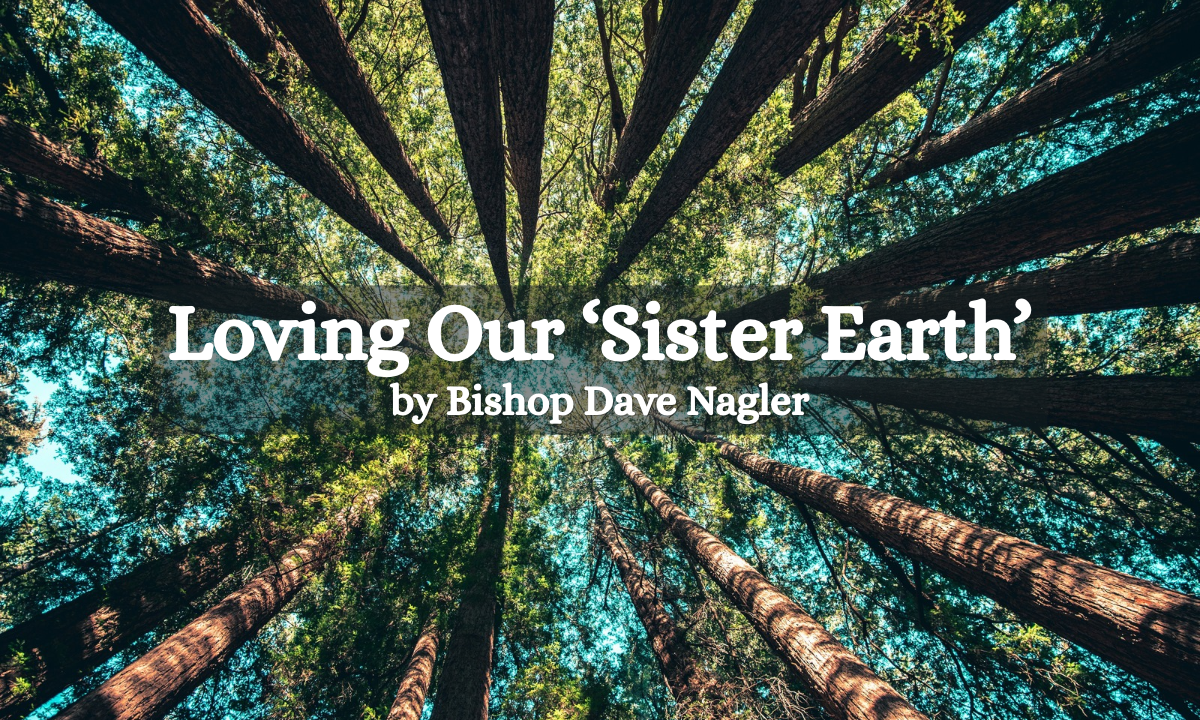
Pope Francis wrote an encyclical entitled “Laudato Si” that called on Christians to acknowledge the interdependence of human beings with the natural world, and called on all of us to care for the earth that God so loves. Like his namesake, he refers to the earth as our “sister” and writes,
This sister now cries out to us because of the harm we have inflicted on her by our irresponsible use and abuse of the goods with which God has endowed her. We have come to see ourselves as her lords and masters, entitled to plunder her at will. The violence present in our hearts, wounded by sin, is also reflected in the symptoms of sickness evident in the soil, in the water, in the air and in all forms of life. This is why the earth herself, burdened and laid waste, is among the most abandoned and maltreated of our poor; she “groans in travail” (Rom 8:22). We have forgotten that we ourselves are dust of the earth (cf. Gen 2:7); our very bodies are made up of her elements, we breathe her air and we receive life and refreshment from her waters. (Laudato Si #2)
Pope Francis reminds us of our interdependence. He names the sin of overconsumption. He calls us to reclaim our roles as gardeners, as conservationists of our poor, abused sister.
Recently, Pacifica Synod Vice President Jeff Cours, Pastor Jim Friedrich, and seminarian Stephanie Dykes led a book study of Life After Doom: Wisdom and Courage for a World Falling Apart by Brian McLaren. This book presents four possible scenarios as a result of climate change and ponders what a faithful Christian response might be. This response goes way beyond the call to reduce, reuse, and recycle. McLaren invites the reader to understand the trajectory we are collectively on and to imagine how we might respond to this moment. He demonstrates how the Bible is an Indigenous text full of deep wisdom that can help us unlearn the patterns of behavior that are literally killing us.
Will we learn from Indigenous cultures how to value the impact of our actions on future generations? Will we choose to share when resources become scarce, or will we hoard and protect whatever we can? These questions and many others must be answered collectively. We dare not look away or retreat into personal comfort.
That book study has led some leaders to ask, “What next”? How can we go beyond discussions to actions that will lovingly serve our dear Sister Earth? To that end, a launch team for a new Creation Care Ministry is beginning on October 22nd. There will be an introductory Zoom meeting at 7:30 pm (PDT), 4:30 pm (Hawaii Time) to learn more. The link is here. With a super El Niño in the Pacific Ocean, wildfires intensifying in Southern California, and a series of hurricanes damaging the Hawaiian Islands, the time is now for us to have this vital conversation.
In my role as Bishop, I want to do what I can. At the last conference of bishops meeting, I invited my colleagues to join me in a new affinity group dedicated to creation care. This group will focus on liturgical resources, opportunities for advocacy, and events that celebrate the wonder of the natural world. Several bishops from other synods are joining this effort.
I have also been asked to represent the ELCA at the next global climate summit, COP 31. This annual event includes reports on how nations around the world are responding (or failing to respond) to the Paris Climate Accords. Faith communities must be represented at this event so that we can counter the narrative that religion only supports the exploitation of our natural resources. I will attend this conference November 16-21 in Antalya, Türkiye. I ask for your prayers for the global leaders who gather at this critical time.
When I was elected, I lifted three areas of emphasis beyond the core work of congregational vitality. They were anti-racism, care for immigrants, and environmental stewardship. With the leadership of many in our synod, we have begun the work on the first two. I have felt that the third area, creation care, has been waiting for our attention. Now the Holy Spirit seems to be calling new leaders to rise and take on this vital work. I pledge myself to this task, and I invite others to join us. Whether you are an ocean lover like me or someone who comes alive in the forest or the desert, our Sister is calling us to love her and care for her. May God guide our steps, bless our work, and fill us with joy and love.
Peace,
+Dave





.png)
.png)
.png)
.png)
.png)