written by John Baynton
In the Christian faith, deacons are relatively unknown, or at best a nebulous mix of different roles of service, but deacons have a long history in the Christian tradition of faith. The word deacon comes from the Greek word diakonia, which commonly gets translated as service or ministry. A deacon then is one who does diakonia. However, diakonia is more than just service—it is about doing the work that Christ does, or as A.K. Ploeger says, “acting as God would act if God was a human being” i.e. as Christ acts. In this context, we can see Christ as the first Deacon, living out a life of diakonia. This is the life we Christians are called to follow as we live out our baptismal vocations.
St. Stephen is commonly listed as the proto (or first) deacon. While never specifically named as such, Stephen is a part of the seven that are lifted up for the role of diakonia. Specifically, there was a need in the community; the Greek widows were not receiving their portion of the community food. These seven deacons were lifted up to address that problem, to make sure everyone was fed and taken care of in the community.
The first person in the scriptures named as a deacon is Phoebe. She traveled with Paul, offered her house as a meeting place, and delivered some of the letters Paul wrote. She gave from her abundance and acted as the hands and feet of the church.
In 1 Timothy, Paul established the office and expectations of a deacon as well as a bishop. This shows that deacons were already active and had some measure of authority in the early church.
After the narrative story of the Bible ends, we know the office of deacon evolved to fit many different needs. Deacons were doorkeepers, watching to keep the community safe during times of persecution; they were table servants, making sure all were fed and assisting with the meal; and, as in the case of St. Lawrence, they were often stewards of the money.
Around 250 CE, St. Lawrence himself lived into the diaconal call to speak truth to power, challenging assumptions when the Romans came to confiscate the treasure of the church. When asked where the treasure of the church was, Lawrence pointed to the poor and needy and replied, “Here is the treasure.”
After Christianity became the state religion in Rome in 380 CE, the role of deacon morphed again, becoming the eyes and ears of the bishops, and becoming more administrative in nature. This is also around the time when some used the office of deacon as a stepping stone for advancement.
By the early 1200s, St. Francis did not see his office as a deacon as such, though. He wanted to be working with the people, living a life of service in poverty to better live out God’s mission in the world. St. Francis saw his role as steward, to care for everything around him, to let the light of God shine into and through him. The quote commonly attributed to St. Francis that really shows this Diaconal Mission for the world has become famous: “Preach the gospel at all times; use words when necessary”. This shows a dedication to a lived Gospel, that the mission of God is lived out through the actions of people, not just in our thoughts and prayers.
The role of Deacon does not really change much from this point until the 1800s. There are some diaconal ideas and roles in the reformation and post-reformation, but for the most part, the Protestant churches lost the office of deacon.
In the 1800s, with the rise of the industrial revolution, many people moved to cities looking for opportunities, which led to poor working and living conditions. To alleviate these, the role of charity took center stage. With this rise came the Deaconess Mother Houses, able to distribute this charity to those who need it most in society. This revitalized the diaconal role in the church and helped to bring the Church as a whole back to caring for the poor, those in need, the sick, and the hungry.
But the resuscitation was short-lived. Through the standardization of helping careers and the rise of non-profit organizations, this role and idea of deacons fell to the wayside in many Christian traditions.
In our tradition, some form of diaconal leader has existed in each of our predecessor bodies. When the ELCA was formed, we inherited all of these. Through the years they have been pulled together and formed into one roster (Word and Service), and in 2019 the ELCA churchwide assembly voted to ordain deacons.
Our ELCA constitution describes deacons in this way: "This church calls and receives onto the roster qualified persons to provide a ministry of Word and Service, exemplifying the life of Christ-like service to all persons and creation: nurturing, healing, leading, advocating dignity and justice, and equipping the whole people of God for their life of witness and service within and beyond the congregation for the sake of God's mission in the world.”- ELCA Constitution 7.51
Deacons in the ELCA today are leaders doing specialized ministry such as: youth and family, office administration, music ministry, faith formation, and care ministry. Some are leading outreach into their communities by running meal and food programs or by providing care and resources to the unhoused. This is just a handful of the wonderful work deacons can do, living a life like Christ and lifting up and equipping others to live out their baptismal calls.
Through this whole history from the beginning until the present, deacons have been filling gaps. Whether it is making sure the Greek widows are fed, being the eyes and ears for bishops, caring for the poor, or even writing this article. Deacons have seen the need in their communities, have provided for those needs, and have asked others to come alongside and join them in living out this call. Deacons have always been present. We have always been here doing the work. Our invitation remains open to all as it always has. Join us! Come and join us in feeding the hungry, join us in making a joyful noise, join us in advocating for the least in society. Come and join us in living a life like Christ.
John Baynton serves as the Deacon of Care Ministry at Hope Lutheran Church, Palm Desert. He has been ordained since 2025. In his spare time he enjoys listening to audiobooks, playing video games, and painting with his wife of three years, Pastor Emily Baynton. They live in Palm Springs, California.
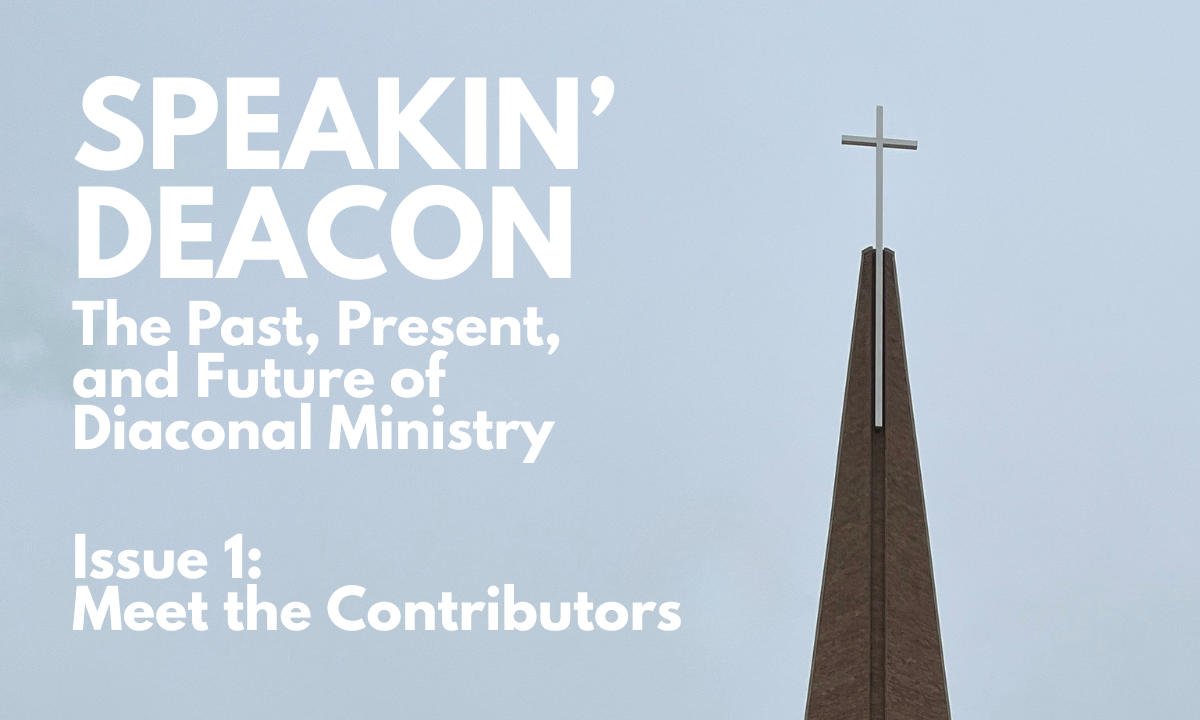
Read Issue 1 of Speakin' Deacon here.








.png)
.png)
.png)
.png)
.png)