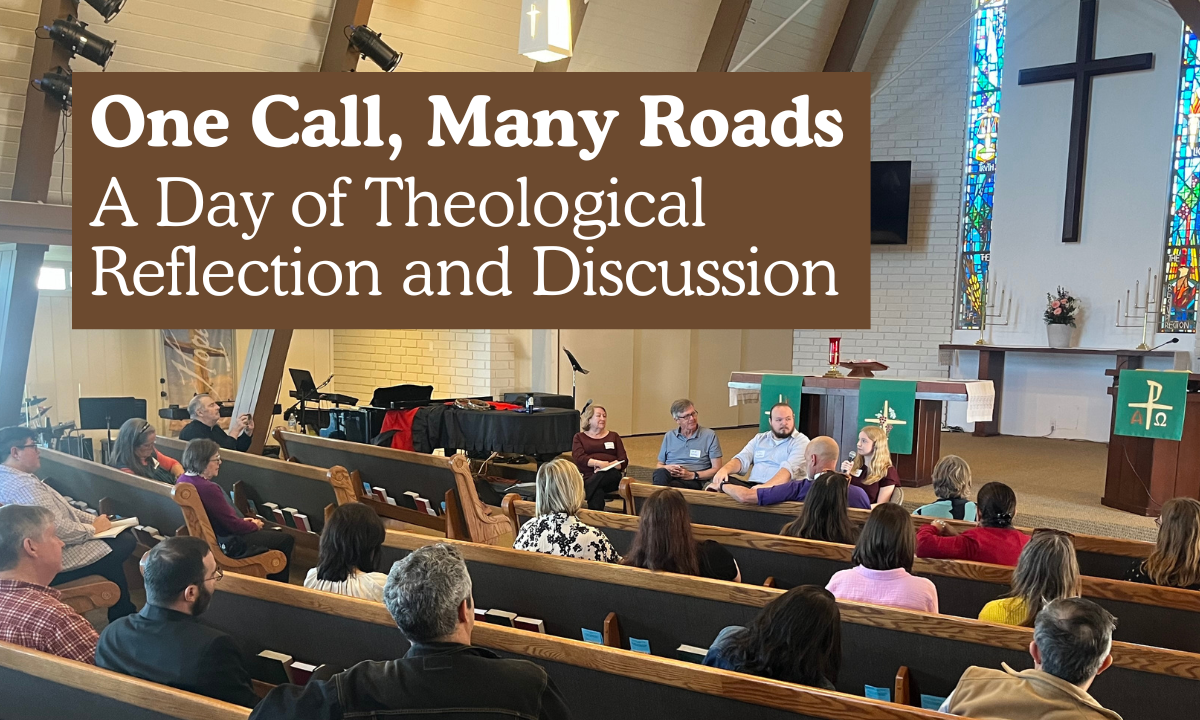
What began as a panel discussion with two pastors and two deacons became a spirited Q&A session about the multitude of possibilities of building God’s kingdom synodwide. The 2026 Day of Theological Reflection reveled in the endlessly creative ways God and the Lutheran church have given us to do ministry.
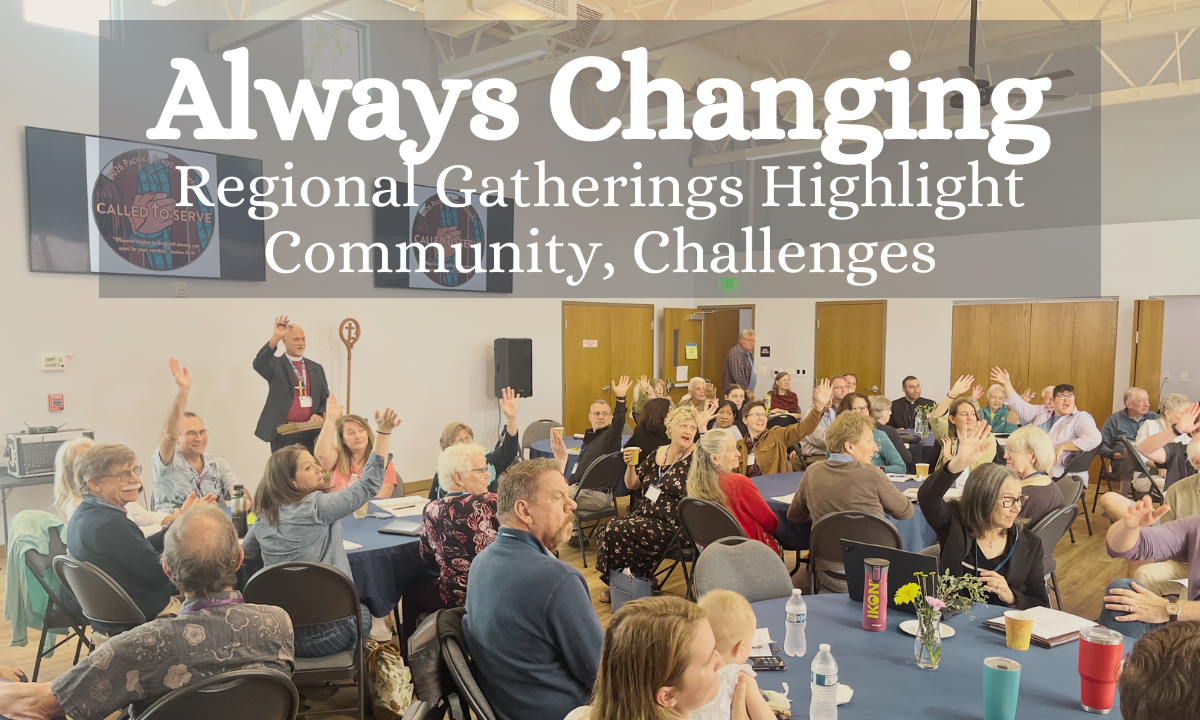
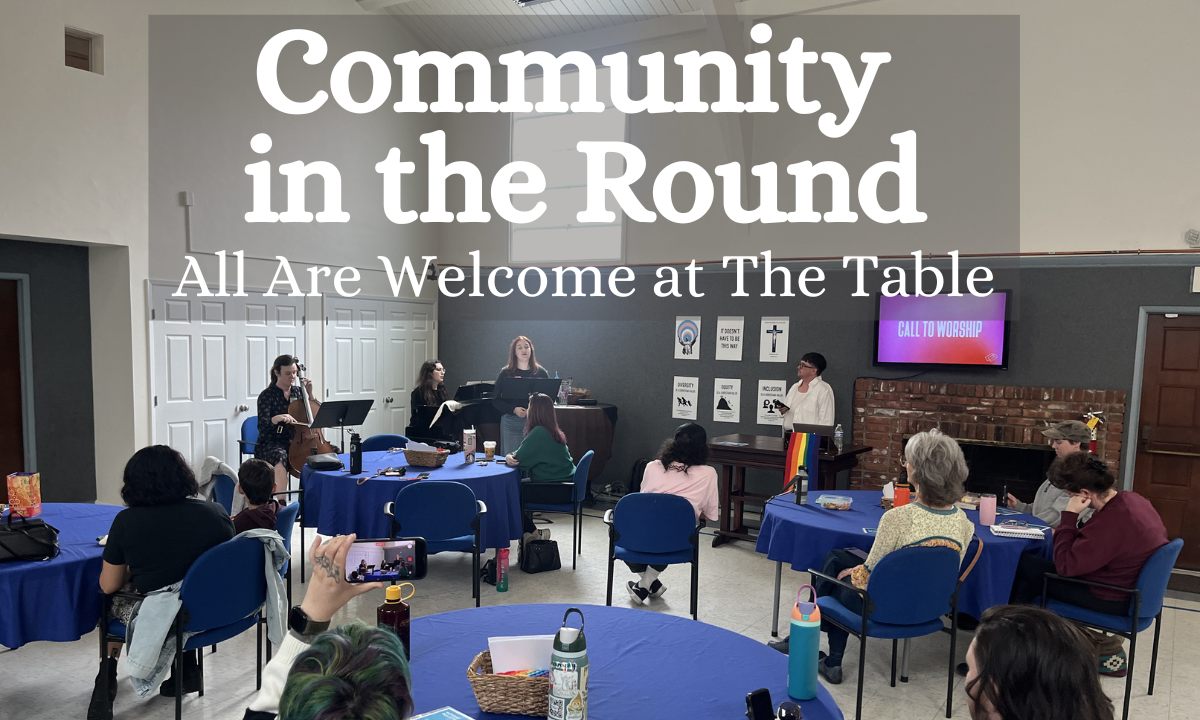
Gathering under the theme of Embodying a Church of Word, Sacrament, and Service, rostered ministers and lay leaders from across Pacifica Synod traveled to Our Savior’s Lutheran in San Clemente, California, for an idea-sparking day of conversation and revelation.
After some introductory fellowship over coffee, the program formally began with a panel discussion featuring Emily Baynton, Pastor of St. John’s Lutheran in Palm Desert; John Baynton, a deacon at Hope Lutheran in Palm Desert (and husband of Emily); David Mattson, pastor at Gloria Dei Lutheran in Dana Point; and Margy Schmitt Ajer, a now retired deacon who served at Christ Lutheran in San Clemente. Each member of the panel shared their call stories, which helped to frame the larger discussion.
“I kept asking the question, ‘How does faith impact the rest of our lives? How do we represent the grace and love of God thorugh what we do in addition to what we say?’” Schmitt Ajer said, recalling her long journey toward becoming a deacon. “Finally the Church gave me language to articulate what I’d always known my call to be. I remember sitting there with tears running down my cheeks, because the Church was saying, ‘This is your call.’ Word and Service. Ministry on the boundary. Church in the world. I’ve had four rosters and four titles, but throughout the journey, there’s been one call.”
“It’s the congregation’s call; it’s the community’s call,” offered Mattson. “I think we could do a better job on how people are called. What is your ministry? What is your call?”
John Baynton agreed. “A lot of this starts with helping people in their discernment,” he said. “Letting them know what you see in them and determining where they are and what they’re hearing. Having these kinds of conversations helps people to determine their gifts. The degree doesn’t matter; it’s the call that matters.”
Much of the conversation involved embracing flexibility in the ways to integrate the two separate tracks of Word and Service and Word and Sacrament. It wasn’t about either/or but about both/and. “The integration of Word and Sacrament and Word and Service come together and create beautiful ministry,” Emily Baynton said.
The Bayntons had an interesting perspective to offer as a married couple serving in two different—but complementary—ways. “When I saw John coming into this role [as a deacon],” Emily Baynton said, “it didn’t undermine me as a pastor, it reinforced me. It can put us in a place of partnership because we can rely on each other’s gifts instead of fighting over who gets to do what.”
Schmitt Ajer spoke meaningfully about the need to reframe the ways the church has historically thought about these two different roles.
“We’re really big about having a box over here and another box over there,” Schmitt Ajer said. Pastors and Deacons shall never meet. No. There’s a big circle in the middle that’s about the needs and the work of the church, and these are two different ways to go about it. How do we bring those gifts together?”
Bishop David Nagler offered an even broader perspective during the Q&A.
“We have a huge need for leaders in the church,” Nagler said. “We need people who are deeply connected to their spirituality, regardless of which role. We need to be listening together about, ‘What is God doing now?’ God is ahead of us always, calling in people who oftentimes come from different cultures, different backgrounds, and different ways to be part of this church. What if God’s opening up the doors to the priesthood of all believers?”
After a lunch of intentional cross-call conversation, the Day of Theological Reflection concluded with worship and the sacrament of foot-washing to send everyone on their way refreshed and energized to begin implementing the ideas they had during the day.
Though it came from his call story at the beginning of the day, Mattson offered words that were helpful to consider on the road back home.
“It all leads back to the cross,” Mattson said. “There’s something about the cross that just speaks to me when I want to give up. When I’m tired, frustrated, angry; when I can’t understand what’s going on in the world, I just take a deep breath and remember: there’s something about the cross that holds me.”






.png)
.png)
.png)
.png)
.png)